What is Answer Engine Optimization (AEO) & How to Rank in AI Search in 2026
 luxury branding
 Share
Search isn’t what it used to be.
Gone are the days when ranking #1 on Google guaranteed traffic. Today, users are getting direct answers from AI tools, without ever clicking a link. Whether it’s ChatGPT, Google’s AI Overviews, or platforms like Perplexity, the way people search has undergone a fundamental change.
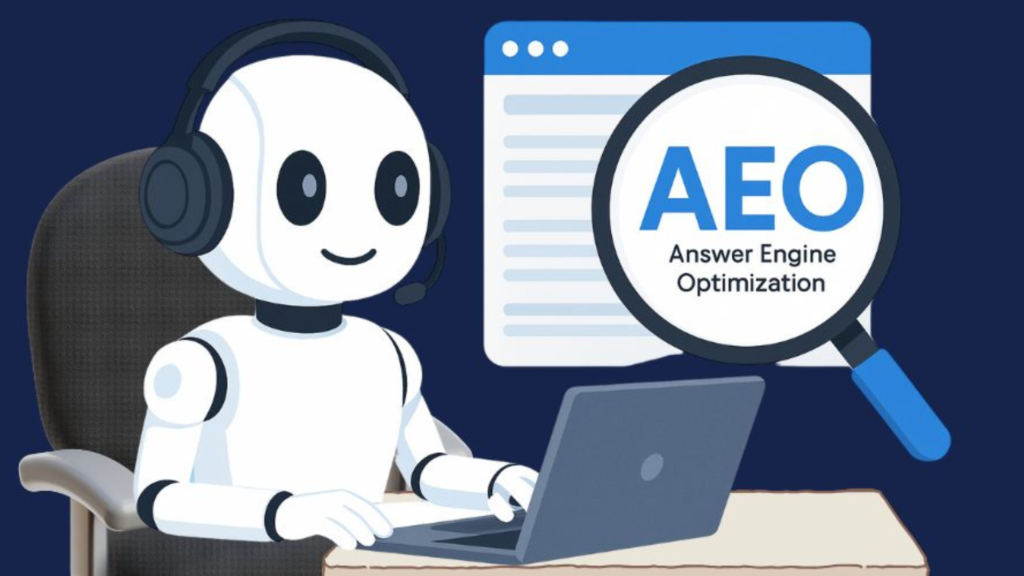
Welcome to the era of Answer Engine Optimization (AEO), where your content doesn’t just rank, it responds.
What is Answer Engine Optimization (AEO)?
Answer Engine Optimization, or AEO, is basically the process of optimizing your content in such a way that AI tools can easily pick it, understand it, and present it as a direct answer to users.
In simple words, instead of writing content just for search engines, you are now writing content for AI systems that talks to users.
Earlier:
You write blogs → Google ranks them → user clicks.
Now:
You write content → AI reads it → AI answers the user.
Which means if your content is not clear, not structured, or not directly answering the question, it might not even get picked, no matter how good it is.
AEO focuses on:
- Giving clear answers.
- Matching user intent properly.
- Structuring content in an easy-to-read way.
- Making information simple and understandable.
And yes, it’s not as complicated as it sounds, but it does require a shift in thinking.
How AI Search Engines Actually Choose Content
AI tools are smart, but they still follow certain patterns when picking content. It’s not random at all.
- Clarity of Answer
If your content directly answers the question in the beginning, chances are much higher that AI will pick it. If you keep delaying the answer, you might lose the chance.
- Authority & Trust
Websites that regularly publish useful and relevant content are seen as more reliable. If your content looks inconsistent or low-quality, it may not get selected.
- Structure of Content
Content that is broken into headings, bullet points, and small paragraphs is easier for AI to read and extract from.
- Intent Matching
This is very important. Your content should match exactly what the user is asking. Not something similar, but exactly relevant.
So, it’s not just about writing more… It’s about writing smarter. The more you pinpoint the readers core topics the more AI will flag the content as useful.
How to Rank in AI Search (Practical AEO Strategies)
Now comes the important part, how you can actually optimize your content.
- Start Answering Immediately
Don’t wait too long to give the answer. Right after your heading, try to include a short and clear explanation.
For example, if your heading is a question, your first 2–3 lines should directly answer it.
- Write in a Conversational Way
People are not searching like robots anymore, so your content shouldn’t sound robotic either.
Write like how people speak:
- Simple language
- Natural tone
- Easy explanations
It makes your content more AI-friendly and also more engaging.
- Use Proper Structure
Big paragraphs can confuse both readers and AI tools.
Instead:
- Use short paragraphs
- Add bullet points
- Include subheadings
Nevertheless, having a proper sentence structure will definitely makes your content more readable and easier to extract. This will also promote readability.
- Focus on Topics, Not Just Keywords
Earlier, people used to focus heavily on keywords. Now it’s more about covering the topic properly.
Explain things in depth. Add examples. Make it useful.
This helps build authority, which AI tools actually consider.
- Add FAQs Section
FAQs are very important for AEO because they match exactly how users ask questions.
Try to include:
- Real questions
- Short and clear answers
By implementing these techniques, businesses can increase their chances of appearing in AI responses.
- Build Brand Presence
Mention your brand naturally in your content. Over time, AI tools start recognizing it as an entity.
This helps in building trust and improving visibility in Perplexity, Google AI Overviews, and ChatGPT Ranking
Different platforms work slightly differently, but the base remains the same.
ChatGPT: Prefers content that is clear, informative, and well explained. If your content is too complex, it might skip it.
Google AI Overviews: Focuses more on authority and structured content. It also looks at trust signals.
Perplexity AI: Likes content that is factual and straight to the point. Overly promotional content may not perform well here.
Common Mistakes You Should Avoid
There are some mistakes that many people still makes. Where these things can reduce your chances of getting picked by AI:
- Writing only for keywords
- Ignoring user intent
- Making content too lengthy without clarity
- Not structuring the content properly
- Over-promoting without giving value
The Future of Search: What Should You Do Now?
Search is evolving, and honestly, it will keep changing.
But one thing is clear. Focusing on trending content that is helpful, concise, and well-structured will always perform better.
If you start adapting now, you can stay ahead. If not, catching up later might become difficult.
How PathSeekers Can Help You Stay Ahead
At PathSeekers, we understand that SEO alone is not enough anymore.
We focus on:
- AEO-driven content strategies
- AI-friendly content structuring
- Performance marketing insights
- Conversion-focused content
We don’t just help you rank. We help you get noticed in AI answers, where the real attention is shifting.
Whether you are a startup or an established business, adapting to AI search early can give you a strong advantage.
Final Thoughts
Answer Engine Optimization is not just a trend, it’s more like the next phase of how digital visibility works.
If your content is not being picked by AI, you are missing a big opportunity.
So instead of asking:
“How do I rank?”
Start asking:
“How do I get the answer?”
If you want, I can next: