The Future of AI in Luxury E-Commerce: Opportunities and Risks
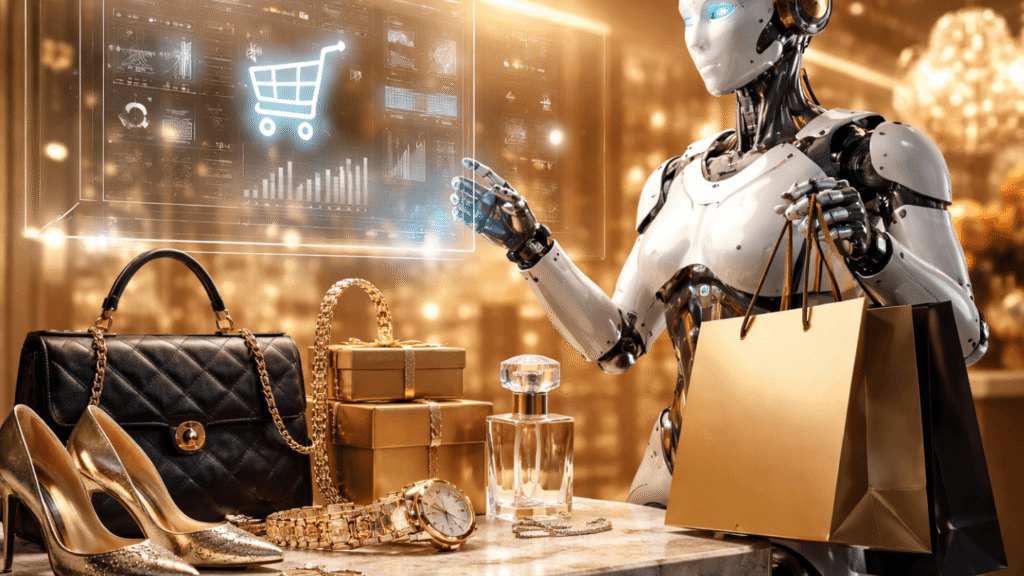 e-commerce growth
 Share
Where digital meets desire… Some brands aren’t just selling products, they’re selling a feeling. A sense of identity. A moment.
For the longest time, translating that feeling into a digital space felt almost impossible. Screens flattened the experience. Algorithms felt too transactional. And yet, things are shifting.
With the rise of AI in e-commerce, the online journey is becoming more intuitive, more responsive, and, when done right, more personal than ever.
It’s no longer about pushing products. It’s about understanding intent, anticipating desire, and shaping experiences that feel almost… effortless.
But here’s the tension: the same technology that enhances the experience can also dilute what makes it special.
Opportunities: When Technology Feels Personal
- Personalization That Doesn’t Try Too Hard
The best experiences don’t feel engineered, they just feel right.
AI is making that possible at scale. Instead of broad suggestions, customers are now met with selections that feel considered, almost handpicked. The kind of recommendations that make you pause and think, “Okay, this gets me.”
It’s a subtle shift, but a powerful one. Because when personalization feels natural, not forced, it builds connection, not just conversion.
- Predicting What People Want Before They Do
There’s something incredibly powerful about being one step ahead.
AI allows brands to read patterns, what people browse, what they linger on, what they come back to. Over time, this turns into insight. And that insight turns into foresight.
From planning inventory to shaping collections, decisions become less reactive and more intentional. It’s not just about keeping up with demand, it’s about quietly staying ahead of it.
- Turning Online Shopping Into an Experience
Scrolling is easy. Feeling something while you scroll? That’s different.
With AI-driven tools, think virtual assistants, visual search, or even digital try-ons, the online space starts to feel less like a catalog and more like an experience. Something interactive. Something immersive.
Customers can explore, experiment, and engage in ways that go beyond static images. It brings back a sense of discovery that digital shopping once lacked.
- Smarter Visibility Without Feeling Everywhere
Being seen matters. But how you’re seen matters more.
AI is helping brands show up in the right places, in front of the right people, at the right time, without feeling overexposed. It refines targeting, sharpens messaging, and makes every touchpoint more intentional.
When paired with the right e-commerce digital marketing agency or a performance-focused paid media agency, it becomes less about reach and more about precision.
- Collaborations That Actually Make Sense
Not every partnership needs to be loud to be impactful.
AI is helping brands find voices that align, not just in audience, but in aesthetic, tone, and values. The result is collaborations that feel natural, not transactional.
With a thoughtful influencer marketing agency, these partnerships turn into storytelling moments, ones that resonate quietly but deeply.
Risks: When Smart Starts Feeling Predictable
- When Everything Starts to Feel the Same
Here’s the thing, when everyone uses the same tools, experiences can start to blur.
Too much automation can strip away nuance. Recommendations begin to feel repetitive. Journeys start to look identical.
And for brands built on distinction, that sameness can be dangerous.
- The Fine Line Between Insight and Intrusion
Personalization works… until it feels like too much.
Customers are becoming more aware of how their data is used. And while they appreciate relevance, they also value privacy, especially in this segment.
Trust is quiet, but once broken, it’s loud. Managing that balance is everything.
- Missing the Human Element
AI is efficient. But it’s not emotional.
It can learn behavior, but it doesn’t understand meaning the way people do. It doesn’t feel craftsmanship, intention, or story.
That’s why the human layer still matters. The tone of a message. The thought behind a campaign. The subtle details that make something memorable.
Without that, even the most advanced experience can feel… flat!
- When Algorithms Get It Wrong
AI isn’t flawless.
It reflects the data it’s trained on, and sometimes, that data carries gaps or biases. When that happens, the output can feel off. Slightly disconnected. Not quite aligned.
For brands that rely heavily on perception, even small missteps can stand out.
Finding the Balance: Where Strategy Matters
The future isn’t about going all-in on AI. And it’s definitely not about avoiding it.
It’s about using it with intention.
The brands that will lead this space are the ones that:
- Keep experiences refined, not over-engineered
- Let data guide decisions, but not define identity
- Use technology to enhance the journey, not replace it!
Growth strategies like e-commerce brand scaling with SEO and understanding the paid media importance for brand visibility play a key role here, ensuring that expansion doesn’t come at the cost of perception.
Final Thought: Keep It Smart, But Keep It Human
AI is changing the game. Quietly, but significantly.
It’s making digital experiences smoother, sharper, and more responsive. But the real magic doesn’t come from the technology itself, it comes from how it’s used.
Because at the end of the day, people don’t connect with algorithms.
They connect with how something makes them feel.
And the brands that remember that?
They won’t just keep up with the future, they’ll shape it!